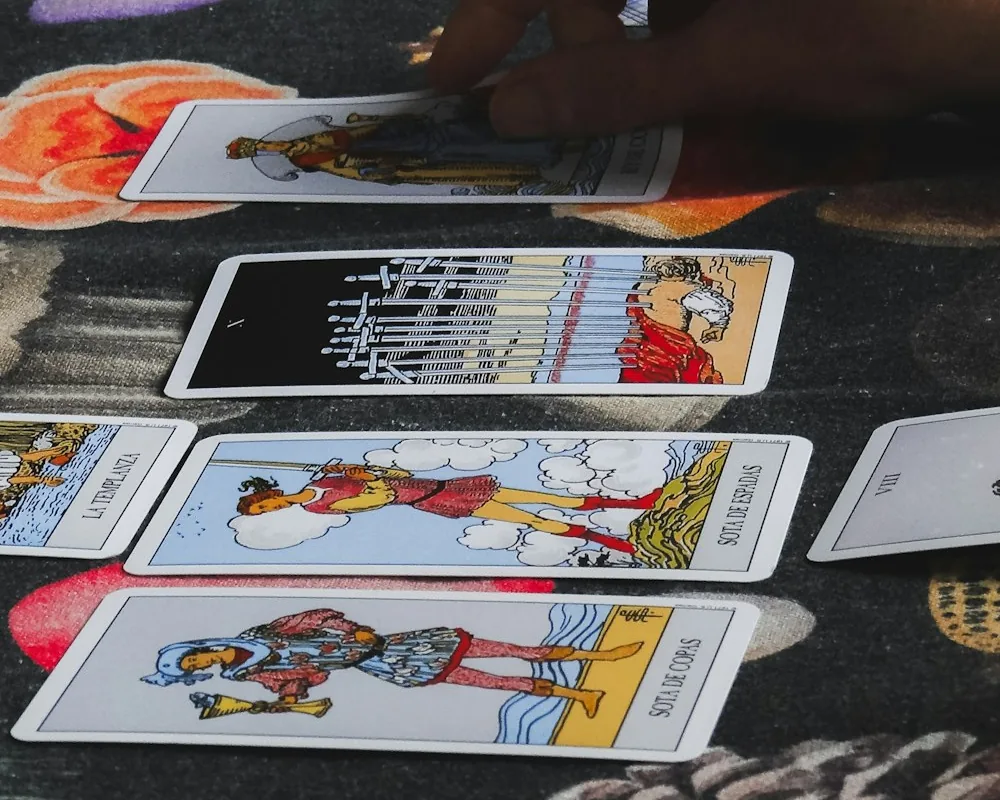
A complete reading from question to conclusion
A repeatable protocol instead of unbounded improvisation
Preparation
Before the cards: hear the request, reformulate it together with the person, agree on the frame and the review date. Choose the scheme for the question, not for the mood. If reading for yourself, do the same in writing: recording the question before drawing disciplines more than any ritual.
Check your own state. Fatigue, anger at the person, or a strong desire to 'prove' something with the cards distort a reading more than any 'wrong' shuffle. An honest 'I am not in shape today, let us do it tomorrow' is a mark of mastery, not weakness.
The session protocol
Working order: question aloud → layout → thirty seconds of silent overview of the whole picture → reading positions → synthesis of axes and links → a conclusion of theme, tension, resource, and one step → agreement on review. The silent overview before words matters: the first holistic impression is often more accurate than the first dictionary meaning.
Speak in verifiable phrasings: 'it may be,' 'it looks like,' 'check it against the facts.' Ask questions and accept corrections: if the person says 'no, that is not my situation,' it is not a defeat but a refinement of the card. A reading is a dialogue, not a monologue with pictures.
Closing and review
The conclusion contains theme, tension, resource, and one concrete step. Record the review date. After the agreed interval, compare not 'did it come true' overall, but which conditions materialised, which decisions changed the course, and where the interpretation was too broad.
Do not draw clarifiers until you get the desired answer. Give one additional card one function: explain the obstacle, show the resource, or concretise the action. After that, close the session.
Keeping a journal
A minimal entry: date, question, scheme, cards by position, a one-phrase conclusion, review date. A maximal one adds the first impression, a photo of the spread, and evening notes. A journal is the only way to separate real accuracy from pleasant memories of it.
Once a month, re-read your entries and count: which positions hit most often, which cards you systematically overrate, which phrasings turned out too broad. This statistics about yourself is worth more than any new book of meanings.
Exercises
- 1Run a practice session following the protocol and note at which step uncertainty appeared.
- 2After seven days, review an old entry: separate the accurate observation from the general statement and from the action that genuinely helped.
- 3Create a journal page template and use it ten times in a row without changing anything.
- 4Record three cases where the querent's correction changed your interpretation for the better.